
Intelligence, Interpretation, and the Persistence of the Unfamiliar

Chapter I — On the Limits of knowing
For a long time, intelligence has been treated as a kind of privileged access to reality. The success of modern science has reinforced the impression that measurement, modeling, and prediction bring us steadily closer to the structure of the world as it truly is. Yet when one looks more carefully at how knowledge actually operates, this confidence begins to feel less stable.
Human intelligence did not emerge as a faculty designed to reveal the deep architecture of the universe. It emerged as a local solution to local problems: how to survive, how to anticipate danger, how to coordinate with others, how to manipulate an environment at a manageable scale. What we perceive, what we categorize, and what we explain are all shaped by that origin. Large portions of reality are filtered out, not because they are false, but because they are irrelevant to the kind of organism we happen to be.
A familiar example makes this easier to see. A highway encountered by an ant is not misperceived as a leaf or an obstacle. It is an obstacle, approached through a sensory and cognitive framework that has no access to concepts like infrastructure or engineering. The ant’s perception is coherent within its own world. The mismatch lies elsewhere.
A similar mismatch appears in the behavior of a moth drawn toward a lamp. The moth is not confused in any meaningful sense. Its orientation system evolved in relation to distant light sources, and the artificial environment exploits that calibration unintentionally. What looks like error is better described as a collapse between two incompatible reference frames.
Once framed this way, the question becomes difficult to avoid: how often does something analogous happen to us?
Developments in computer vision forced this question into the open. When researchers first attempted to teach machines how to see, they quickly discovered that vision was not a simple matter of recording images. Tasks that appear effortless to humans—distinguishing foreground from background, identifying an object under changing light, inferring depth from limited cues—proved extraordinarily difficult to formalize. The image itself turned out to be insufficient. Meaning had to be inferred, reconstructed, guessed.
This realization shifted the problem. Vision was no longer understood as a transparent window onto the world, but as an active process shaped by assumptions, shortcuts, and prior structures. Artificial systems made this visible by failing in ways humans found unfamiliar, and by succeeding in ways that bypassed human intuition altogether. Different systems, exposed to the same data, extracted different realities.
Large language models extended this insight into another domain. These systems operate effectively without sharing human experience, embodiment, or intention. They generate coherence without comprehension in the ordinary sense. Interaction remains possible, even productive, yet the internal process stays opaque. What appears as understanding is often a pattern that happens to align with our expectations.
At some point, data must be translated into human terms. That translation is rarely neutral. Categories are chosen, metaphors applied, boundaries drawn. The world does not arrive as explanation; explanation is something we impose in order to function within it.
None of this diminishes the achievements of science. It does, however, complicate the idea that explanation exhausts reality. Models work, predictions succeed, technologies advance, while large areas remain only partially legible. Intelligence, in this light, looks less like a universal solvent and more like a filter—highly effective, but narrowly tuned.
From that perspective, the persistence of phenomena that resist classification should not be surprising. They appear at the edges of perception, interpretation, and language, where frameworks begin to strain. The difficulty is not that such phenomena exist, but that we are uncomfortable acknowledging the limits of our own interpretive reach.
This discomfort has consequences. It encourages premature certainty, dismissal, or myth-making, depending on context. It also obscures a quieter possibility: that understanding, in some cases, may remain indirect, provisional, or incomplete without ceasing to be meaningful.
Chapter II — Solaris and the Failure of Contact
Stanisław Lem’s Solaris is often introduced as a novel about alien intelligence. That description is not wrong, but it is incomplete in a way that matters. The book is less concerned with the nature of the alien than with the consequences of encountering something that does not align with human categories of understanding at all.
The planet Solaris is covered almost entirely by a vast, dynamic ocean. From orbit, it displays extraordinary complexity. It produces large-scale structures, sustained patterns, and behaviors that suggest organization. Over decades, scientists devote immense effort to studying it. They catalog formations, invent terminologies, propose theories. Entire disciplines emerge around the attempt.
And yet, nothing resembling communication ever occurs.
What makes Solaris unsettling is not hostility or mystery in the conventional sense. The ocean does not attack. It does not conceal itself. It does not retreat. It simply exists, indifferent to the interpretive machinery directed at it. The failure is not one of data acquisition, but of alignment. The phenomenon remains present while refusing to become legible.
Lem takes care to show how the scientific project persists anyway. Research continues, papers accumulate, debates multiply. Over time, the discourse surrounding Solaris grows so dense that it begins to obscure the object itself. The ocean becomes less a phenomenon than a field of commentary. Knowledge expands, understanding does not.
At a certain point, the ocean responds.
This response is not linguistic. It does not clarify intent or reveal structure. Instead, it produces manifestations drawn from the inner lives of the observers themselves. Figures from memory appear, embodied and autonomous, confronting the scientists with unresolved experiences they had assumed were private or buried.
These manifestations are often misread as communication, but Lem makes their ambiguity explicit. They do not behave as messages. They do not answer questions. They do not even appear to recognize the humans as interlocutors in any meaningful sense. If anything, they function as mirrors, reflecting the psychological contours of those attempting to observe.
The effect is destabilizing. The encounter collapses the boundary between observer and observed, but not in a way that produces insight. Instead, it exposes how much of the scientific stance depends on distance, objectivity, and asymmetry. When that asymmetry disappears, the framework falters.
What Solaris ultimately suggests is not that alien intelligence is unknowable in principle, but that the expectation of mutual intelligibility may itself be misplaced. The ocean is not hiding. It is simply operating under constraints, scales, and logics that do not intersect cleanly with human cognition.
This distinction matters. The problem is not insufficient instrumentation or flawed methodology. It is not a lack of rigor. The problem lies in the assumption that intelligence, if present, must express itself in ways that resemble ours, or at least in ways that can be translated into human terms.
Lem seems particularly skeptical of this assumption. Throughout the novel, scientific ambition appears sincere, disciplined, and well-funded. Its failure is not moral. It is structural. The encounter exposes the limits of a worldview that equates understanding with control, explanation with access.
The most striking aspect of Solaris is its restraint. Lem resists providing an answer. The ocean remains unexplained. No final revelation arrives. What changes instead is the posture of the observer. Certainty erodes. Confidence gives way to a quieter awareness of limitation.
In this sense, Solaris is not pessimistic. It does not argue against science, nor does it elevate mysticism as an alternative. It simply refuses the comfort of closure. The universe, as Lem presents it, does not guarantee reciprocity. It may contain forms of organization that remain adjacent to us without ever becoming interpretable.
This is an unsettling possibility. It suggests that contact need not resemble dialogue, and that presence does not imply comprehension. The encounter can occur, persist, and even transform those involved, while leaving the underlying phenomenon largely untouched by human understanding.
Rather than resolving this tension, Lem leaves it suspended. The ocean continues its motions. The scientists remain in orbit. Meaning is neither confirmed nor denied. It is displaced.
What remains is not an answer, but a boundary—a recognition that intelligence, when stripped of familiar assumptions, may appear less as a mind waiting to be known and more as a process that does not require us at all.
Chapter III — When Understanding Becomes Projection
If Solaris exposes the limits of scientific understanding, it also gestures toward something quieter and more unsettling: the moment when explanation begins to slide into projection. When faced with a phenomenon that resists categorization, silence is rarely the human response. More often, meaning rushes in to fill the gap.

The scientists orbiting Solaris do not merely observe the ocean. They surround it with terminology, theories, disciplinary boundaries, and institutional rituals. Over time, this growing body of discourse starts to resemble understanding, even as genuine comprehension remains out of reach. The ocean itself recedes beneath layers of interpretation. Lem appears less concerned with whether the ocean can be known than with what humans do once knowing begins to fail.
This pattern is not confined to fiction.
Modern artificial intelligence has reopened a similar tension. In fields such as computer vision and large language models, systems often function successfully—sometimes remarkably so—while remaining internally opaque. They produce outputs that feel coherent, even intentional, without offering access to the processes that generated them. Faced with this opacity, users reach instinctively for human terms: the system “understands,” “hallucinates,” “decides.” These words do not describe internal states so much as they make interaction possible. They bridge a gap we cannot otherwise cross.
What emerges is not understanding in a strict sense, but a workable narrative.
This impulse long predates modern technology. When Carl Jung described the emergence of archetypes, he was not proposing symbolic systems as explanations of reality. He was describing a stabilizing response to forces too vast or abstract to integrate directly. Symbols give shape where direct representation would overwhelm. They allow experience to remain coherent even when its source remains obscure.
Joseph Campbell approached the same terrain from a cultural angle. Myths, in his view, do not function as early attempts at science. They orient individuals within a world that cannot be fully explained. They render the unknown narratable, approachable, livable. Myth, in this sense, is not about truth in a factual register, but about psychological navigation.
Seen this way, the visitors in Solaris take on a different role. They do not read as messages encoded by an alien intelligence, nor as deliberate attempts at communication. They resemble mirrors more than signals, reflecting unresolved material back at the observer. The ocean does not speak. It provokes. Whatever meaning arises does so within the human response, not within the phenomenon itself.
Some encounters fail not because information is missing, but because they bypass the levels at which information normally operates. In those situations, interpretation fills the void, drawing from whatever symbolic resources are available—personal memory, trauma, religious imagery, technological metaphors.
Artificial systems make this mechanism unusually visible. When a neural network behaves in an unexpected way, engineers may label the result “emergent.” The word gestures toward complexity while quietly acknowledging uncertainty. Something happened. The system works. The internal path remains unclear. The term does not resolve the mystery; it keeps it at a tolerable distance.
At this point, the boundary between explanation and myth begins to blur. Not because science collapses, but because human cognition relies on scaffolding. We cannot interact meaningfully with what we cannot frame, even if the frame remains provisional.
This is where Lem’s insight sharpens. The risk is not simply that radically different forms of intelligence might elude our understanding. The deeper risk is that we mistake our interpretive structures for features of the phenomenon itself. The story we tell begins to stand in for the encounter.
The universe offers no guarantee that our narrative instincts will align with its organization.
If intelligence is not a single universal property but a range of strategies shaped by context, scale, and embodiment, then mutual intelligibility becomes uncertain. Some systems may intersect with human activity only tangentially, producing effects without dialogue, presence without reciprocity. In such cases, the most active process may occur less within the phenomenon than within the human effort to make sense of it.
This does not dissolve reality into illusion. It places limits on access.
Before asking what something is, it may be worth asking what kind of understanding we are capable of bringing to it—and what kind of understanding it does not require from us at all. Between those boundaries, interpretation proliferates. Sometimes it clarifies. Sometimes it distorts.
Rather than pushing further into abstraction, the next step is to examine a contemporary setting where this tension has become unavoidable: a space where institutional authority, sensory data, advanced technology, and symbolic interpretation collide, and where misunderstanding carries consequences beyond embarrassment or disbelief.
Chapter IV — On Naming the Unfamiliar
One of the more revealing aspects of the recent U.S. congressional hearings was not the footage, nor the testimonies, nor even the institutional tone in which they were delivered. It was the language. Careful, tentative, repeatedly adjusted, and often left unresolved.
Terms such as non-human intelligence appeared where earlier discourse might have defaulted to objects, craft, or vehicles. At moments, more speculative expressions surfaced—suggesting unfamiliar modes of traversal or dimensionality—only to be withdrawn or left deliberately vague. The instability of the vocabulary was striking. What seemed to matter was not precision, but restraint: a visible effort to avoid names that carried conclusions with them.
This shift is not incidental. Language does more than describe phenomena; it shapes the space in which they can be approached at all. To call something a “spaceship” is already to imply origin, intention, engineering, and narrative. To speak instead of non-human intelligence suspends those assumptions. It acknowledges presence while leaving form, mechanism, and motive open.
In this sense, the gradual abandonment of the term “UFO” was almost unavoidable. It once served a limited and pragmatic purpose—unidentified flying object—but over time it collapsed into a single image: the flying saucer, the extraterrestrial visitor, the familiar science-fiction script. Whatever the phenomenon may be, that image has become too narrow to contain it. The term no longer pointed toward uncertainty; it resolved it prematurely.
This difficulty is not new. Throughout history, unfamiliar aerial or luminous phenomena have repeatedly placed human observers in a similar position. Something appears. It moves in ways that resist ordinary explanation. It produces fear, awe, disorientation, sometimes lasting transformation. Meaning becomes urgent, and meaning is supplied from the symbolic material available at the time.
Ancient texts preserve many such moments. The vision described in the Book of Ezekiel—wheels within wheels, radiant structures descending from the sky—has often been treated as allegory or theology. Yet the account insists on motion, texture, and presence. It does not read as an abstract idea, but as an event that overwhelmed the language available to describe it. Fire, metal, eyes, sound, rotation—these elements are assembled into a description that feels at once concrete and insufficient.
Similar tensions surface in medieval chronicles, Renaissance reports, and early modern pamphlets describing celestial signs. Luminous formations, objects maneuvering in the sky, displays interpreted as omens or warnings. These phenomena were real enough to be recorded, debated, sometimes feared. Their meaning, however, remained unsettled, shaped by the cosmologies and anxieties of their time.
The case of Fátima illustrates this ambiguity with particular clarity. Thousands of witnesses reported a luminous event accompanied by unusual motion and perceptual effects. For believers, it became a Marian apparition. For skeptics, an episode of mass hysteria. For others, a meteorological anomaly. What tends to fade from view is the raw consistency of the descriptions themselves, which resist clean placement in any single category. The experience came first. Interpretation followed.
Taken together, these episodes suggest a continuity that predates modern technology. The phenomenon—whatever its nature—appears to have accompanied human societies for a long time, while the stories used to frame it change. Gods, angels, celestial wheels, flying shields, airships, saucers, drones. Each period supplies its own metaphors, its own explanatory scaffolding. The encounter itself remains oddly resistant to closure.
Seen from this angle, the contemporary emphasis on non-human intelligence reads less like a revelation than a correction. It reflects a growing awareness that earlier labels may have narrowed the field too quickly, shaped as much by expectation as by observation. It also introduces a new unease. Once intelligence is decoupled from humanity, it becomes difficult to locate. Is it technological, biological, distributed, environmental, emergent? The term answers none of these questions, and that may be precisely its value.
For me, this issue is not purely academic. I have encountered phenomena that resisted immediate explanation, not once but more than once. They did not arrive with context or meaning attached. They did not announce origin or intent. What they did was alter perception. They introduced a lasting shift in how reality itself appeared structured—less stable, less exhaustively mapped, more layered than I had assumed. Whatever they were, they made it difficult to treat these questions as intellectual curiosities alone.
This personal dimension matters only to a point. It proves nothing. What it does reveal is how quickly dismissal becomes complicated once experience enters the picture. One can remain skeptical while acknowledging that misinterpretations and fabrications do not account for everything. Noise exists, but noise does not preclude signal.
For years, a familiar refrain held that better cameras and better sensors would dissolve the mystery. If nothing appeared, the matter would be settled. That expectation rested on an assumption: that the phenomenon, if real, would behave like a conventional object, presenting itself cleanly to our instruments and categories. It overlooked the historical record of ambiguity, inconsistency, and perceptual disruption that has characterized these reports across time.
Perhaps the question was framed too narrowly. Instead of asking why definitive proof remains elusive, it may be more revealing to ask why the phenomenon repeatedly appears at the edges of classification—provoking interpretation without resolution. Why it generates stories before explanations. Why it persists through shifts in technology while remaining difficult to describe in final terms.
Approaching it this way does not require abandoning rigor. It requires a different emphasis. The issue is no longer whether the phenomenon can be forced into a familiar narrative, scientific or otherwise. It is whether we can recognize the limits of our narratives without retreating into ridicule or belief. Between those extremes lies a more demanding posture: one that accepts continuity without certainty, and presence without comprehension.
From here, the problem re-enters contemporary discourse in a different register—not as myth or rumor, but as an institutional challenge. It appears in public hearings, in sensor data, in intelligence assessments, and in the difficulty of naming what is being observed at all. It is there, within those constraints, that the current phase of the discussion begins.
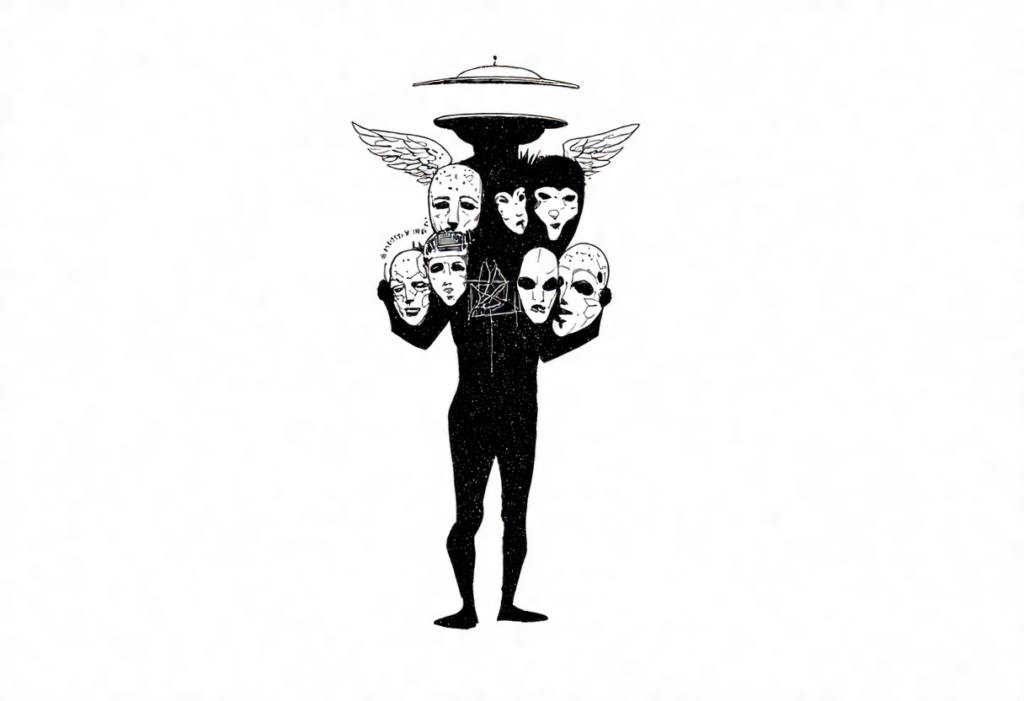
Chapter V — The Hearings That Almost No One Watched
In the summer of 2023, something unusual happened in Washington, D.C. Not because of what was revealed, but because of how little attention it received.
On July 26, the U.S. House Oversight Subcommittee on National Security, the Border, and Foreign Affairs convened a public hearing focused on unidentified anomalous phenomena. The setting was ordinary. The procedures were familiar. The language was restrained, procedural, almost dry. There were no dramatic announcements, no theatrical gestures, no attempt to frame the event as historic. It unfolded like many other congressional hearings before it.
And yet, it marked a quiet rupture.
Three witnesses testified under oath: a former intelligence officer, a former Navy pilot, and a retired Navy commander. Their backgrounds were conventional, their demeanor measured. They spoke of sensor data, classified briefings, reporting channels, and institutional obstacles. The focus was not speculation, but process—what had been observed, how it had been recorded, and where information appeared to stall within the system.
One detail stood out immediately. The term non-human intelligence was used deliberately and repeatedly. Not as a flourish, and not as a conclusion, but as a placeholder. The witnesses avoided language that implied vehicles, craft, or origin. When pressed, they acknowledged uncertainty. When constrained by classification, they said so plainly.
This was not the vocabulary of disclosure. It was the vocabulary of limitation.
The hearing did not offer definitive proof of anything extraordinary. It did not confirm extraterrestrial visitation. It did not present a coherent theory. What it did reveal was something more modest and, in a way, more unsettling: that elements within the U.S. defense and intelligence apparatus were encountering data they could not fully reconcile, using systems designed for exactly that purpose.
Equally striking was the aftermath.
Outside of a brief wave of online discussion and coverage in a handful of specialized outlets, the hearing passed with little fanfare. Major television networks gave it minimal attention. Newspapers treated it as a curiosity or ignored it altogether. In many countries, including my own, it went almost entirely unreported. For most people, it might as well not have happened.
This absence is difficult to interpret.
If the hearings were merely a psychological operation, a distraction, or a coordinated narrative push, one would expect amplification. Mass media thrives on spectacle, controversy, and simplified storylines. A sensational explanation—aliens, secret technology, imminent revelation—would have been easy to circulate. Instead, the dominant response was silence.
At the same time, the hearings were not framed as fringe. They took place within formal institutions, under oath, with bipartisan participation. They followed established procedures. Nothing about them resembled the aesthetics of conspiracy culture. And yet, they failed to enter the broader public conversation in any sustained way.
This tension is revealing.
The hearings occupied an uncomfortable space between categories. They were too official to dismiss outright, but too indeterminate to absorb into a headline. They offered neither reassurance nor drama. They produced uncertainty without spectacle. For a media ecosystem optimized for clarity, conflict, and resolution, this may be the least transmissible outcome.
What emerged instead was a kind of institutional deadlock. Sensors registered anomalies. Pilots reported encounters. Analysts flagged inconsistencies. Oversight mechanisms attempted to intervene. Language struggled to keep pace. The system functioned, but without convergence.
In this sense, the hearings did not introduce a new phenomenon. They exposed an old one under modern conditions. The difficulty was not simply that something unfamiliar was being observed, but that existing frameworks—technical, bureaucratic, linguistic—were insufficient to stabilize it.
This may explain the careful choice of words. Non-human intelligence does not explain what is being encountered. It delineates a boundary around what cannot yet be said. It keeps the phenomenon from collapsing prematurely into either fantasy or denial. It names a problem without resolving it.
That restraint, paradoxically, may be why the hearings were so easy to overlook. They did not demand belief. They did not invite dismissal. They asked for attention without offering closure.
For those accustomed to thinking in terms of systems—technical, political, epistemic—this is perhaps the most significant aspect of the event. The hearings were not about revelation. They were about friction. About what happens when data accumulates faster than interpretation, and when institutions designed for control encounter something that resists easy categorization.
In that respect, the hearings resemble earlier moments discussed in this essay. They echo the scientists orbiting Solaris, surrounded by instruments and theories, confronting a phenomenon that remains present without becoming legible. They echo historical encounters that generated records, debates, and symbols without producing consensus.
What makes the contemporary moment distinct is not the phenomenon itself, but the infrastructure surrounding it. Satellites, radar systems, infrared cameras, global communication networks. These tools do not eliminate ambiguity. They redistribute it. They translate uncertainty into datasets, reports, and classifications, all of which still require interpretation.
The hearings, quietly and without drama, brought this condition into view. They revealed a system aware of its own limits, struggling to name what it cannot yet frame. That struggle did not result in revelation. It resulted in language that hesitates, qualifies, and resists finality.
That may be why so few people watched.
Chapter VI — Jacques Vallée and the Problem No One Wanted
Long before congressional hearings, leaked videos, or carefully calibrated expressions such as non-human intelligence, there was already someone arguing that the central difficulty was not a shortage of data, but a failure of framing. That person was Jacques Vallée.
Vallée is often described as a ufologist, a label that tends to narrow his work before it is even encountered. It places him within a cultural niche that this essay has been deliberately avoiding. In practice, his background sits elsewhere: computer science, astronomy, information systems. He worked on early ARPANET projects, contributed to database theory, and spent much of his career thinking about how information circulates, mutates, and reshapes human behavior.
That background shaped his approach. Vallée did not treat the phenomenon as an object waiting to be identified, but as a system interacting with perception, culture, and institutions. The emphasis was not on what it was, but on how it behaved in relation to those who observed it.
From early on, he expressed dissatisfaction with what became known as the extraterrestrial hypothesis—the idea that unidentified aerial phenomena are spacecraft from other planets, piloted by biological beings broadly comparable to ourselves, only more advanced. Vallée did not reject this hypothesis because it was implausible in a cosmic sense. On the contrary, he accepted that advanced extraterrestrial civilizations were possible, perhaps even likely. His objection was structural rather than emotional.
The hypothesis explained too neatly.
It assumed that the phenomenon would behave like a technological actor, that its manifestations would converge toward clarity over time, and that improved instruments would eventually resolve the mystery. This expectation was reasonable. It was also increasingly at odds with the data.
What Vallée observed instead was persistence without convergence. Reports changed form across centuries while preserving certain patterns. Encounters generated confusion rather than information. Evidence accumulated, but interpretation did not stabilize. The phenomenon appeared less oriented toward being understood than toward being experienced. Most importantly, it interacted with belief systems in ways that altered perception, culture, and meaning.
This was not how probes behaved. It was not how explorers behaved. It was not how engineers behaved.
Rather than abandoning the problem, Vallée shifted the question. Instead of asking what the phenomenon was, he asked what it did. When it appeared. How it appeared. What kinds of interpretations followed. How those interpretations evolved over time. What psychological and social effects persisted afterward.
In Passport to Magonia, one of his most influential works, Vallée drew uncomfortable parallels between modern UFO reports and much older accounts involving fairies, angels, demons, and other liminal beings. The point was not to collapse everything into folklore, nor to suggest that medieval observers were witnessing spacecraft. The point was continuity. Something seemed to recur across time, adapting its appearance to cultural expectations while preserving a core strangeness.
For Vallée, this continuity suggested interaction rather than deception. A phenomenon that does not present itself raw, but filtered—perhaps not because it intends to mislead, but because human perception cannot engage it directly.
At this point, the connection to modern technology becomes difficult to ignore. Anyone who has worked closely with complex systems—neural networks, large-scale simulations, emergent behaviors—recognizes the pattern. A system produces observable effects. The effects are real. The internal mechanism remains opaque. Human observers respond by filling the gap with metaphor.
We say a model “understands.” We say it “hallucinates.” We say it “wants” to optimize. These are not technical descriptions. They are pragmatic bridges. They make interaction possible in the absence of transparency.
Vallée argued that the phenomenon occupies a similar space. It generates effects without offering a readable internal model. The result is an interpretive vacuum. Into that vacuum flow belief, fear, myth, speculation, dismissal—often simultaneously.
This is where institutional deadlock begins to take shape.
Scientific institutions tend to favor phenomena that stabilize under repeated observation. Military institutions favor threats that can be classified. Media institutions favor narratives with identifiable agents and conclusions. The phenomenon Vallée described offers none of these. It remains ambiguous, persistent, and resistant to closure.
Seen from this angle, the recent hearings do not represent a breakthrough so much as a symptom. An institutional acknowledgment that something does not fit existing categories, coupled with an inability to move beyond that acknowledgment. The careful language, the emphasis on behavior over origin, the reluctance to draw conclusions—all of this echoes Vallée’s earlier diagnosis.
What is striking is how closely contemporary official discourse now resembles his position, often without reference to it. Terms such as non-human intelligence function as placeholders in exactly the way Vallée anticipated. They do not explain. They delimit. They mark a problem rather than resolve it.
Vallée himself never asked for belief. He warned repeatedly against premature conclusions, including his own. His work does not argue that the phenomenon is extraterrestrial, interdimensional, spiritual, or artificial. It argues that the urge to settle on any of these explanations too early may be the real obstacle.
In this sense, his relevance today extends beyond the phenomenon itself. It touches a broader epistemic tension. We increasingly inhabit a world shaped by systems—technological, informational, ecological—that produce effects without offering understanding. We interact with them effectively while remaining unsure what they are in any deep sense. We name them in order to function, not in order to comprehend.
The phenomenon Vallée studied may be extreme, but it is not isolated. It occupies the same conceptual territory as opaque AI systems, global networks, and emergent behaviors that resist linear explanation. It challenges the assumption that truth necessarily arrives as clarity.
From this perspective, the extraterrestrial hypothesis is neither absurd nor sufficient. It accounts for one possibility while leaving the broader pattern untouched: a recurring mismatch between human cognition and something that remains persistently out of register.
Vallée’s contribution was to notice that mismatch and to resist resolving it prematurely. In doing so, he anticipated not only the current institutional hesitation, but the deeper unease that follows when explanation itself begins to lose its footing.
The phenomenon does not ask for belief. It asks for restraint.
Chapter VII — Signals, Control, and the Limits of Interpretation
One way to understand Jacques Vallée’s contribution is to stop treating it as an alternative explanation and to see it instead as a diagnosis of a different kind of problem. The phenomenon he described does not behave like an object waiting to be identified. It behaves more like a signal interacting with a system that cannot fully decode it.
Vallée’s training in computer science and information systems shaped this intuition. He was accustomed to environments in which information circulates imperfectly, where noise and signal overlap, and where meaning does not reside in isolated data points but emerges through interaction over time. In such systems, the central question is rarely “what is the message?” and more often “what does the system do in response?”
This shift is subtle, but it changes the entire frame.
A technological artifact—a satellite, a probe, a device—can usually be reverse-engineered. Its structure constrains its function. Its behavior points back to design. A signal interacting with a cognitive or cultural system behaves differently. Its effects may be real and measurable even when its source remains obscure. In those cases, interpretation does not follow the phenomenon. It becomes part of it.
Vallée noticed that reports of anomalous encounters were often accompanied by secondary effects. Beliefs shifted. Worldviews reorganized. Psychological disturbance appeared. Symbolic elaboration followed. In some cases, the effects spread socially. These patterns were not incidental. They appeared repeatedly, across contexts and cultures. The phenomenon seemed to engage human perception and meaning-making processes with a consistency that instruments rarely achieved.
From an information-theoretic perspective, this is unusual. A signal that reliably induces interpretation without resolving it introduces feedback. Perception alters belief. Belief reshapes expectation. Expectation conditions future perception. Over time, the phenomenon settles into culture in ways that are difficult to disentangle from the interpretive machinery surrounding it.
This is not how most physical processes behave. Gravity does not respond to belief. Radio waves do not reorganize themselves around mythology. Yet the phenomenon Vallée described appears to operate near the boundary where objective events and subjective interpretation refuse to separate cleanly.
It is here that the idea of control becomes relevant—not control in a conspiratorial sense, but in a cybernetic one. In cybernetics, influence does not require commands. It emerges through feedback. A system shapes behavior by modifying the informational environment in which decisions are made. The agent experiences autonomy; the structure constrains what responses remain available.
Vallée was careful with this idea. He did not claim intentional manipulation, nor did he attribute agency in any familiar sense. Control, in this context, describes a relationship rather than a plan. A phenomenon perturbs cognitive and cultural systems in reliable ways while remaining resistant to stable explanation.
Modern artificial intelligence offers an unexpected parallel. Large language models do not understand meaning as humans do, yet they exert real influence over how meaning circulates. They do not assert truths. They shift probabilities. They reshape discourse by altering what feels plausible, coherent, or worth saying. Their outputs appear intentional even when no intention is present.
This resemblance is instructive. Humans are acutely sensitive to pattern and coherence. When coherence appears, mind is inferred. When coherence persists without explanation, narrative fills the gap.
Vallée’s caution was not that the phenomenon deceives us, but that we are quick to deceive ourselves by stabilizing uncertainty too early. The extraterrestrial hypothesis, in this light, is not a fantasy. It is a premature resting point. It offers symmetry where asymmetry remains, and closure where interaction continues.
What makes this framing uncomfortable is that it offers no decisive moment. There is no final reveal, no disclosure that resolves the ambiguity. Instead, there is a prolonged interaction between something unknown and a species deeply invested in explanation.
This is where personal experience becomes relevant—not as evidence, but as orientation. Direct encounters with anomalous phenomena tend to share a certain quality. They are vivid, destabilizing, and resistant to integration. They do not arrive with explanatory context. Perception shifts before understanding does. Long afterward, what remains is not certainty, but a subtle recalibration of what seems possible.
In my own case, such experiences produced doubt rather than belief—doubt about the completeness of the frameworks I had relied on to describe reality. They did not converge on a single explanation. They pointed instead toward a limitation.
That same limitation now appears at an institutional scale. The congressional hearings, with their cautious language and unresolved testimony, reflect a similar pattern. Acknowledgment without synthesis. Documentation without convergence. Signals without decoding.
Vallée anticipated this outcome not because he predicted specific events, but because he recognized a structural constraint. Some problems do not yield to accumulation. More data does not necessarily bring clarity. At a certain point, it produces saturation. The bottleneck shifts from empirical collection to conceptual capacity.
For those accustomed to thinking in terms of systems, networks, and emergent behavior, this should feel familiar. We increasingly operate within environments shaped by forces we can measure but cannot fully interpret. Algorithms optimize outcomes we struggle to explain. Models outperform intuition. Effects arrive before reasons.
The phenomenon Vallée described occupies an extreme position along this spectrum. It is not an anomaly outside modern thought. It tests the assumptions on which that thought rests.
If there is anything to be taken from this, it is not an instruction about belief. It is a reminder of how fragile interpretation becomes when confronted with signals that do not converge toward meaning. The impulse to resolve ambiguity quickly—to name the unfamiliar in familiar terms—is strong. Vallée’s work gestures toward a different discipline: holding uncertainty without abandoning rigor.
The question that follows is no longer whether the phenomenon is real. It is how a civilization built around explanation responds when explanation itself begins to lose stability.

Chapter VIII — Art, Symbols, and the Human Need to Touch the Unknown
When conceptual frameworks begin to strain, humans rarely respond by remaining silent. We respond by making things.
Long before systematic science, before formal philosophy, before institutional religion, humans painted walls, carved figures, arranged stones, and told stories. These acts were not explanations in the modern sense. They were ways of positioning oneself in relation to something that could not be fully grasped, but could not be ignored either. They were gestures toward presence rather than mastery.
Art tends to appear precisely where comprehension falters but experience persists.
This is why symbolic systems recur so reliably across cultures. Not because they encode universal truths, but because they offer stable forms for unstable encounters. A symbol does not resolve a problem. It holds it in place. It allows something overwhelming to be approached indirectly, without demanding resolution or finality.
This dynamic is particularly clear in the work of Andrei Tarkovsky. His films are often described as philosophical or spiritual, but that description misses something essential. Tarkovsky did not use cinema to explain ideas. He used it to construct conditions under which certain experiences could occur. His films do not move toward answers. They slow the viewer down until ordinary interpretive habits begin to fail.
Nowhere is this more evident than in Stalker.
Like Solaris, Stalker centers on an encounter with something that resists ordinary categories. The Zone is not an enemy, not a resource, not a puzzle to be solved. It has no stable rules that can be reliably learned or exploited. Attempts to map it fail. Attempts to master it collapse into danger. The Zone does not behave like territory. It behaves like a presence.
What distinguishes Stalker from conventional science fiction is precisely this refusal of explanation. The Zone is never clarified. Its origin remains ambiguous. Its mechanisms are opaque. Even its effects are inconsistent. What matters is not what the Zone is, but how people move within it—carefully, hesitantly, with attention to signs that cannot be systematized.
The Stalker himself is not a guide in the usual sense. He does not understand the Zone. He respects it. His knowledge is not technical, but relational. He navigates through ritual, caution, and humility. The Writer and the Professor, each armed with their own interpretive frameworks, struggle precisely because they want the Zone to submit to meaning.
Tarkovsky understood that some environments cannot be engaged through domination or explanation. They demand a different posture—one closer to listening than to analysis.
This posture mirrors the function of symbols more broadly. A symbol does not claim transparency. It creates a space in which engagement remains possible without clarity. Carl Jung described symbols not as encoded messages, but as psychological necessities—forms that emerge when something real cannot yet be integrated consciously. They are not answers. They are containers.
Joseph Campbell observed a similar function at the level of culture. Myths, in his view, do not describe the world as it is, but how it feels to inhabit it. They organize experience when explanation becomes insufficient. They allow individuals and societies to move forward without pretending to understand everything they encounter.
Seen from this perspective, symbolic art is not opposed to rationality. It is what allows rationality to survive contact with its own limits.
The phenomena discussed in earlier chapters—opaque systems, unresolved encounters, forms of intelligence that resist familiar categories—do not merely challenge theory. They disrupt orientation. When something appears that refuses classification, the disturbance is not only intellectual. It is existential. One’s sense of how the world works becomes unstable.
Art becomes a way to regain footing.
Across history, encounters with the unfamiliar have left their traces less in formal explanations than in images, rituals, architectures, and narratives. Celestial wheels, luminous beings, forbidden zones, descending forms, radiant geometries. These are not technical schematics. They are attempts to make an encounter inhabitable.
This does not require the encounter to have been imaginary. In many cases, symbolization may have been the only available mode of engagement.
Modern culture often treats symbolism with suspicion, as if it were a concession to irrationality. Yet even now, when confronted with systems we cannot fully understand—financial markets, algorithmic decision-making, global networks—we reach instinctively for metaphor. We speak of black boxes, invisible hands, ghosts in the machine. These figures do not explain mechanisms. They allow action to continue in the absence of understanding.
Art operates in this same space, but with fewer pretenses. It does not promise explanation. It does not insist on closure. It allows ambiguity to remain present without converting it into failure. In this sense, it may be one of the few remaining domains where uncertainty is not immediately pathologized or dismissed.
This may help explain why certain contemporary films, artworks, and sound practices resonate so strongly when dealing with opacity, emergence, or non-human agency. They do not illustrate ideas. They stage limits. They place the viewer or listener inside a condition where meaning is felt rather than resolved.
At a personal level, encounters with anomalous phenomena often leave people searching for expression rather than answers. What remains is not a theory, but an image. A sensation. A shift in perception that resists translation into propositional language. Art becomes a way to acknowledge the experience without reducing it.
In this sense, symbolic creation is not escapism. It reflects a form of intellectual restraint. It accepts that understanding can be partial, provisional, or indirect. It resists the impulse to either dismiss what cannot yet be named or inflate it into certainty.
Without this grounding, the discussion risks becoming disembodied. Abstract. Fatiguing. The reader is asked to track systems, institutions, and epistemic failures without anywhere to stand. Art provides that place—not by simplifying the problem, but by reintroducing scale, texture, and presence.
If earlier chapters traced the breakdown of explanatory frameworks, this one lingers on why those frameworks existed in the first place. Not to conquer the unknown, but to coexist with it.
From here, the movement forward does not require greater altitude. It requires return. A return to lived experience, memory, and the quiet ways humans adapt to what they cannot master. The phenomenon does not disappear when explanation pauses. It becomes part of how meaning is made.

Chapter IX — A Personal Note on Encounter and Memory
Up to this point, personal experience has remained mostly in the background of this essay, referenced indirectly and used as orientation rather than exposition. That choice was deliberate. Experiences of this kind are often dismissed not because they are implausible, but because they are narrated too quickly, too completely, or with an urgency that invites either belief or rejection. Neither response is especially useful.
What follows is not an attempt to persuade. It is an attempt to clarify why these questions have remained present for me over time.
In the early 1990s, during a camping trip in Mexico organized by the Boy Scouts, I was part of a group of children and adult leaders spending the night outdoors. The setting was ordinary: tents, supervision, routine activities, the kind of environment designed to be structured and safe. There was nothing ritualistic about it, no expectation of anything unusual. We were simply there.
At some point during the night, something appeared in the sky.
What I remember most clearly is not its size or distance, but its quality. It did not resemble an aircraft, a satellite, or anything I had seen before or since. It had a luminous, fluid appearance—closer to a glowing substance than to a solid object. The closest analogy I can offer is a lava lamp, not in shape, but in the way light and matter seemed to coexist without clear boundaries. Its color shifted, tending toward orange, but never settling.
What made the event unmistakable was its behavior. The object did not remain singular. It separated into multiple parts—at least four, possibly more—each maintaining a consistent relationship with the others, as if governed by an internal logic. This was not dispersion. It was division.
When some of the people around me pointed flashlights toward it, one of these luminous elements responded. It altered its trajectory and moved directly over us. Not abruptly, not aggressively, but decisively. There was no sense of randomness. The movement felt contingent, as if attention had been registered.
That moment remains unusually clear in my memory.
Natural explanations are often proposed in such cases, and reasonably so. Balloons, atmospheric effects, misperception. Yet none of these account comfortably for the combination of form, division, coordinated motion, and apparent responsiveness. Even now, decades later, I do not have a satisfactory explanation. I have also never felt compelled to force one.
What complicates the memory further is what happened afterward—not immediately, but years later.
Long after losing contact with the others who were there, some of us reconnected and spoke about that night. What emerged was not a shared, stable narrative, but a fragmented one. Details I had forgotten entirely were remembered vividly by others. Some aspects I recalled clearly were absent from their memory. A few people seemed to have erased the event almost completely, acknowledging that something had happened but unable—or unwilling—to recall specifics.
This uneven distribution of memory stood out. It was not simple forgetting. It felt selective. For some, the experience remained quietly present, resurfacing intermittently across the years. For others, it had faded into the background of life, as if it belonged to someone else.
This pattern is not unique. It appears repeatedly in documented accounts of anomalous encounters: collective events followed by divergent recollection, partial amnesia, reconstruction through later conversation, or complete disengagement. Whatever the explanation—psychological, neurological, cultural—it suggests that such experiences do not integrate easily into ordinary memory.
In my own case, the encounter did not produce belief. It produced a fracture. A lasting sense that reality may be less exhaustively mapped than we tend to assume, and that perception itself may be more conditional than stable. It altered how I think about intelligence, explanation, and certainty—not dramatically, not all at once, but persistently.
This is why purely dismissive explanations feel unsatisfying to me, just as absolute interpretations feel premature. The experience did not announce its meaning. It arrived without context. It did not resolve into narrative. It occurred, and then it remained, incomplete.
That incompleteness has proven difficult to ignore.
Like the ocean in Solaris, the encounter offered presence without disclosure. It demanded engagement without providing understanding. Over time, I came to see this not as a failure of explanation, but as a structural limit. Some phenomena do not resolve because resolution is not available within the interpretive tools we bring to them.
This essay has moved through intelligence, systems, institutions, language, art, and history, not to build a case, but to trace a boundary. To show how often understanding reaches its edge and responds by naming, symbolizing, or quietly setting aside what does not fit.
My experience sits at that boundary. It does not ask to be explained. It resists explanation. And in doing so, it continues to shape how I approach questions of truth, technology, and reality itself.
There is no conclusion to offer here. No synthesis that would feel honest.
What remains is less an answer than a posture: attentiveness without certainty, skepticism without dismissal, and a willingness to accept that some aspects of the world may accompany us without ever becoming fully legible.
That, too, may count as understanding.